Is your child influenced by toxic content?
Monday 23rd February 2026
The UK Government has launched a new campaign for parents, full of immediate practical advice on how to talk to your children about harmful online content, as they bolster efforts to give every child the healthy upbringing they deserve.
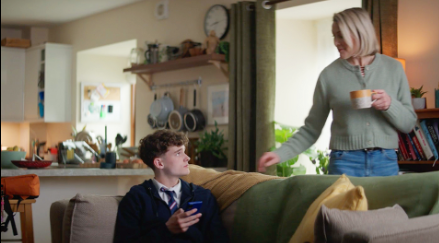
The Department for Science, Innovation, and Technology (DSIT) has launched the ‘You Won’t Know until You Ask’ campaign, providing parents with practical support they can use immediately and the confidence they need to have a conversation with their children about the content they see online.
Backed by behavioural research and academic insights, new guidance has been made available to parents on safety settings, conversation prompts, and age-appropriate advice for tackling misinformation and harmful content – including ragebait and misogynistic content.
It comes as a direct response to parents who have been calling out for support on how to navigate their children’s use of social media. New government-commissioned research released shows that half of British parents admit having never spoken to their children about harmful online content, despite 90% of 11-year-olds now owning a smartphone.
Evidence shows boys are particularly at risk of being algorithmically served misogynistic and harmful content, often without seeking it out. The campaign’s emphasis on building critical thinking skills is designed to help parents talk openly about this kind of material before harmful attitudes take root.
The campaign has been developed with expert organisations including Parent Zone and Internet Matters.
The campaign launches in parallel to a National Conversation on children’s digital wellbeing, with ministers engaging directly with parents and children across the country to shape longer-term measures.
A 3-month formal consultation will open in the coming weeks, including an opportunity for children to contribute directly.
This work builds on progress already delivered under the Online Safety Act: 8 million people now access adult sites with age checks every day; visits to pornography sites have reduced by a third since rules came into force; and the proportion of children encountering age checks online has risen from 30% to 47%, and 58% of parents believe measures are already improving children’s safety.
New laws have been brought forward to criminalise the creation of non-consensual intimate images, including sexually explicit deepfakes. The government is also taking action to designate this offence as a priority under the Act, meaning platforms can be required to take proactive steps to prevent it from happening in the first place, not just react after the harm is done.
Further measures announced by the government will ban ‘nudification’ tools, criminalising those who design and supply them - ensuring those who profit from technology-enabled abuse face serious consequences.
This builds on the government’s wider mission to give every young person the knowledge and skills needed to succeed in work and life , including a new citizenship and RSHE (Relationships, Sex and Health Education) curriculum that will ensure every child can identify misinformation and disinformation from a young age.